Detaching from Challenges
Modern life operates on the unspoken assumption that we can carefully edit our lives to maximize comfort and minimize discomfort. We often strive for constant fulfillment, pushing ourselves to seek external validation and productivity while rejecting the quiet, empty spaces necessary for deep replenishment. We recall life’s stellar moments and expect the next moment to be as good as or better than the last, forgetting that much of life happens in those in-between places.
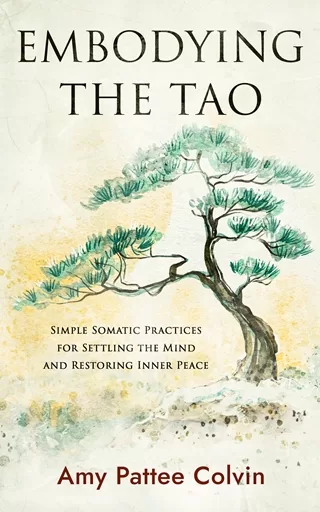
However, nature functions on an entirely different design. In Verse 2 of my new book, Embodying the Tao, Lao Tzu outlines the idea that opposite states are not conflicting forces to be managed; rather, they are complementary realities that define one another. Difficult and easy balance each other. Long and short give each other shape. Just as voice harmonizes with instrumentation, the active melodies of our lives require the existence of spacious silence to have any true meaning.
When we fall into a pattern of constant striving or expectations, our nervous system loses its fluidity and leans toward rigidity. Perceived obstacles are labeled as threats to be conquered, and ordinary mistakes are viewed as failures that must be immediately fixed. This ongoing friction keeps the body trapped in a chronic fight-or-flight loop, leaving the mind racing, the muscles tensed, and the essential self increasingly exhausted.
Returning to Your Center
True vitality and self-empowerment do not come from attempting to make your external environment flawless or easy. Instead, you can choose to cultivate a steady center within your own body—a grounded space where divergent dualities can safely meet and resolve. By stepping out of the pressure to control every outcome and willingly extending curiosity and detachment, you create space for your scattered, anxious thoughts and expectations to transform into a state of confident assurance. You move from the heavy constraint of forcing to settle into the natural, enduring rhythm of flowing.
To help you find relief from an overactive mind and perpetual expectations, this guided visualization offers a tool for nervous system support, and mental and emotional regulation, assisting you in cultivating inner peace. This practice serves as a gentle pathway to recognizing you are enough, just as you are.
Cultivating the Center: Balancing Opposites
Bring the balance of that guided visualization into your body by practicing the following somatic movement.
Begin by standing comfortably with your feet shoulder-width apart, allowing your tailbone to drop slightly toward the earth. As you inhale, slowly shift your entire weight into your right leg, noticing the subtle sensation of strength and fullness. At the same time, observe how your left leg begins to feel lighter and emptier. Stay present with that contrast for a moment. Then, as you exhale, slowly glide back through the center until your left leg feels full, and your right leg feels empty. Notice that neither state is superior; they create the beauty of movement together.
As you gracefully transition between these opposites, let your arms rise and fall naturally with the rhythm of your breath. Inhale and gently raise your arms, noticing the soft resistance and tug of gravity as they ascend. Exhale and smoothly lower your arms, observing the effortless ease of their descent.
By following the natural rhythm of your breath as you shift your weight side to side and let your arms float up and down, you’re sending a safety signal to your nervous system. You’re giving your body permission to return to its organic, balanced baseline. Additionally, you’re integrating the left and right hemispheres of your brain—balancing opposites.
Next, let your arms rest gently at your sides and bring the side-to-side sway to stillness. Stand in peaceful presence for three minutes, and silently say for yourself: I accept the balance of opposites. In the center, I find resilience.