
Unexpected Pneumonia
I recently returned home from leading a group tour through the sacred, rugged landscapes of Scotland, only to be brought to a sudden halt by a case of pneumonia. My system came to a grinding, non-negotiable halt.
As someone who has spent decades teaching somatic movement and nervous system regulation, experiencing a full respiratory shutdown offered an unexpected check-in with my own alignment. The old, ingrained conditioning of our culture often views illness as a failure of willpower—a temporary setback to be aggressively managed so we can quickly return to our busy lives. This may very well be why the chest cold I caught in Scotland but initially dismissed turned into pneumonia the moment I crossed my threshold at home.
In reality, our bodies operate at an entirely different level. They do not understand the checklist. They only understand survival and restoration.
The Nervous System Cost of Ignoring the Signals
When we live with a nervous system in a state of constant high alert, our biology eventually imposes its own limits. When you adopt a pattern of constant doing or striving, your autonomic nervous system interprets your unyielding list of expectations as an immediate threat to be defeated. This chronic tension floods the body with stress hormones, contracts the muscles, and forces breathing into a shallow, restricted rhythm.
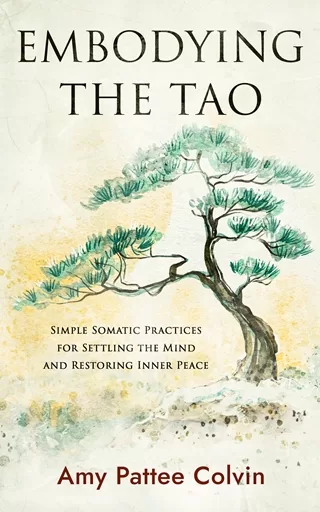
During my first week at home, I lay on the couch, completely drained of my usual vitality. At one point, searching for inspiration I could not find for myself, I opened my book, Embodying the Tao, to Verse 50.
Lao Tzu outlines the fundamental ways human beings navigate their earthly existence:
Verse 50: Transcending Fear
People are born; they live; they die
Three in ten energetically embrace life
Three in ten eagerly embrace death
Three in ten wander aimlessly without conviction
But one in ten really lives
He walks on the savannah without fear of lions
He explores the jungle without fear of tigers
He is not wounded in battle
The lion finds no place for its teeth
The tiger finds no place for its claws
Bullets whiz by
How is this so
His love of life transcends accidental death
The Four Responses to Life’s Interruptions
As I focused on transforming shallow breaths into deeper ones, the somatic lesson became clear. When life forces a standstill, most of us default into one of the first three categories:
- Energetically embracing life through forcing: We attempt to power through exhaustion by multitasking, overdoing, or treating recovery as another task to conquer.
- Eagerly embracing death through catastrophizing: We spiral into fear, fixating on worst-case scenarios and feeling defeated by our physical limitations.
- Wandering aimlessly without conviction: We emotionally detach, floating through our days in a state of numb disconnection and passive resistance.
To be the one in ten who really lives requires an entirely different approach. It asks us to find balance in the center and peace through patience. In that moment on the couch, I did not need to energetically embrace life by pushing my body; I could be the one in ten who chose to live life in harmony. I was dedicated to doing what needed to be done to cultivate health—even when that meant doing absolutely nothing.
By surrendering to doing nothing during a system shutdown, you step into the highest form of self-empowerment. By practicing patience and releasing the need to control the timeline of your recovery, you move closer to a state of peace.
(Note: The complete translation of Verse 50 from my book, Embodying the Tao, will be available here on Thursday, July 23. Check back then to read the complete translation.)
Finding Peace Through Patience: A Lasting Reset
Are you tired of temporary fixes? This guided visualization offers instant relief by teaching an actionable nervous-system tool for mental and emotional regulation, helping you cultivate inner peace. If your mind is currently buzzing with anxiety or feeling scattered by life’s complexities, this gentle framework provides a direct pathway back to a greater sense of peace, harmony, and confident assurance.
Somatic Practice: Choosing to Release Effort
Sit comfortably upright yet relaxed, allowing your spine to feel long while your shoulders soften down and away from your ears.
Place one hand over your heart, your middle tan tien, and rest your other hand in your lap. Now, curl the hand in your lap into a gentle fist, visualizing it as holding all the logistics, demands, and unyielding expectations of your week. Feel the physical tension in your forearm, and notice how the tight grip restricts your breathing.
Take a long, slow inhalation deep down into your lower abdomen. As you slowly exhale, unclench that fist completely, turning your palm open toward the sky. Imagine this movement like letting go of a balloon string, watching the heavy weight of your perceived responsibilities float away into an open sky.
Rest your awareness on your open hand, allowing your chest to widen. Connect this physical openness with the natural compassion of your heart. Remind yourself that, in this exact moment, you have absolutely nothing to prove. Sit in this peaceful presence for three minutes, allowing your body to return to its organic baseline.