
The Gentle and Yielding Will Triumph
Societal norms often present the misconception that to have strong boundaries, you must be hard. We’ve learned that to protect our peace, we must create rigid walls, disconnect from our empathy, and maintain a constant serious demeanor. Alternatively, we might feel that setting personal boundaries is unacceptable, leading us to serve others at the expense of our well-being, which may eventually result in burnout.
In somatic work, we discover that this armor is a rigid, unconscious defense mechanism—like a dead tree that snaps in high winds. In contrast, true boundaries are conscious, flexible choices—like bamboo, which bends beautifully but refuses to break.
My friend Heather and I had a conversation about how to identify your own armoring patterns, whether it manifests as shallow breathing or raised shoulders. We explored ways to replace that exhaustion with genuine resilience
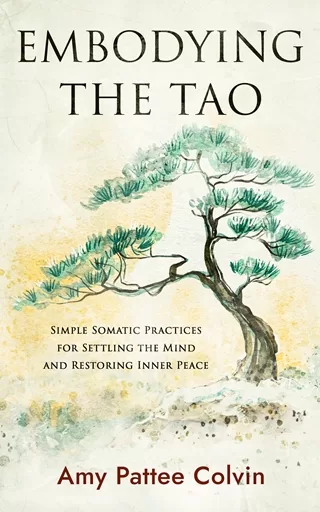
This conversation perfectly reflects the wisdom in Verse 76 of my new book, Embodying the Tao, which reminds us that true strength lies in being supple.
Verse 76: The Triumph of Yielding
At birth, all people are born soft and weak
At death, all people are inflexible and stiff
Young plants are tender and filled with sap
At death, they are withered and dry
Thus, the rigid and brittle ensure death
The gentle and supple affirm life
Therefore, the inflexible leader rarely earns respect
A tree that does not bend easily breaks
Eventually, the hard and strong will fail
The gentle and yielding will triumph
Reflection
The modern workplace praises grit and relentless perseverance, conditioning us to believe that to survive a heavy workload and constant stress, we must become unyielding. We build strict routines, set inflexible boundaries, and physically brace ourselves against the pressure of our daily demands. This modern survival tactic equates toughness with resilience, keeping the nervous system in a brittle, chronic state of defense.
Verse 76 upends this mindset by reminding you that rigidity is not a sign of vitality; rather, it is a precursor to breaking. Think of how you feel when your mind and entire nervous system are deeply exhausted. You may feel achy, stiff, fatigued, mentally foggy, and easily upset by even the slightest change in plans. When you become inflexible in your thinking or leadership, you do not grow stronger. You actually become incredibly fragile, susceptible to cracking under the weight of unexpected challenges.
The Tao teaches that true resilience lies in remaining gentle and supple. A tree that yields and bends in a storm survives, while the stiffest, hardest branch is the first to break. By allowing yourself to soften in changing circumstances rather than forcing your original plan, you conserve your vital energy and create more flow in your life.
Bring to mind a current situation in which you are bracing yourself or clinging to an inflexible standard. Choose to consciously soften and yield a little more today, allowing true resilience to replace exhausting rigidity.
Somatic Invitation
Stand comfortably with your feet shoulder-width apart. Bring your attention to the physical sensations in your joints—your ankles, knees, hips, and shoulders.
To mimic the exhausting nature of rigidity, lock your knees completely straight. Pull your shoulders up toward your ears, tighten your abdomen, and clench your jaw. Notice how this hard and strong posture instantly restricts your breathing and makes your entire body feel brittle. If a strong physical force pushed against you in this moment, you would easily lose your balance.
Inhale slowly and deeply. As you exhale, intentionally relax. Bend your knees slightly, release your shoulders and abdomen, and unclench your jaw.
Begin to sway gently, shifting your weight from side to side, like a supple tree yielding to a breeze. Let your arms hang loosely, allowing them to swing gently with your core’s movement. For three minutes, explore this fluid, yielding motion. Allow your spine to move naturally and your breath to deepen. Notice the fluid movement throughout your entire body, from your feet and ankles all the way up to your head, swaying gently on your flexible neck.
Observe the grounded strength in this suppleness. Your body is relaxed and moving easily, yet your wide, soft stance makes you incredibly difficult to knock over.
When you’re ready, bring your movement to stillness and rest your hands over your lower tan tien. Take this yielding suppleness into the rest of your day.
Silently say for yourself: I release the need to be rigid. I choose to remain supple and resilient.