
How to Measure a Successful Day
If you’re like most high achievers, your answer is probably linked to your output. We are culturally conditioned to evaluate our worth based on external validation—how many tasks we complete, how many hours we work, and how busy we seem to be in others’ eyes.
However, measuring your value solely by your productivity may lead to chronic burnout.
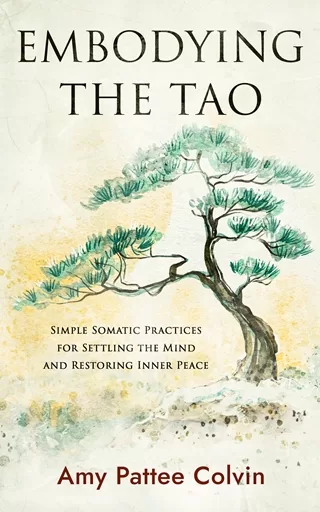
What if your true currency wasn’t your output, but your vitality? In Verse 33 of my new book, Embodying the Tao, Lao Tzu invites us to completely reframe our definition of success. He teaches us that true wealth is found not in external accumulation, but in our internal energetic capacity.
Verse 33: The Wealth of the Soul
Understanding others is knowledge
Understanding yourself is insight
Mastering others requires force
Mastering yourself requires patience
Knowing you have enough is wealth
Persevering through challenges is strength
Live well until you die
Stay connected to the Tao
Then your essence will go on forever
Reflection
Contemporary culture places enormous value on external intelligence—analyzing the markets, studying the competition, and expending vast energy trying to understand and outmaneuver those around us. We are taught to measure our wealth and strength by how much we own or how much leverage we have over others, trapping us on an exhausting, runaway treadmill of wanting more.
Consider your definitions of wealth and strength. Are they tied to external markers, such as how much you own or how much control you exert over others? Verse 33 redefines these terms. It suggests that mastering others requires only force, whereas mastering oneself requires true strength and patience.
True wealth is not about accumulation but stems from the profound psychological state of knowing you already have enough, which protects you from the constant hunger for external validation. True wisdom, or insight, begins when we turn our gaze inward.
Strength is the patience to persevere through your internal struggles without resorting to force. When you stop trying to manage the world and begin the patient work of mastering yourself, you connect with a part of yourself that is not subject to the cycles of life and death. You become aligned with the Tao’s eternal flow.
Somatic Invitation
Stand with your feet shoulder-width apart, knees slightly bent. As you inhale, curl your hands into tiger claws and raise your arms straight out in front of you. Exhale, rotate your hands at the wrists, and lower your elbows so your claws face the horizon in front. Then pull the backs of your claws toward your chest.
Inhale and push them up toward the sky, reaching high. Exhale and let your arms swing down in front of you, beginning a slow forward bend. With softened knees but straight legs, allow your claws to relax into softened paws as you extend toward the earth. It’s okay if your hands don’t touch the ground. Hang here for a moment, letting the weight of your head draw you deeper into the forward bend. You’re not forcing the stretch; you are allowing gravity and time to do the work.
Slowly straighten your spine, rolling up one vertebra at a time while keeping your hands soft. As you return to standing, feel the difference between the clenched strength of the tiger and the resilient strength of your own body. Repeat this cycle five times.
After your final repetition, return to standing, place your hands over your middle tan tien, and rest in this resilient stillness for three minutes.
Silently say for yourself: I have patience with myself. It leads to perseverance.