Free Monday Morning Qigong: Reset Your Nervous System
Join us for a 45-minute live weekly class to release physical tension, quiet mental static, settle into your body, and restore your natural energy before the week begins.
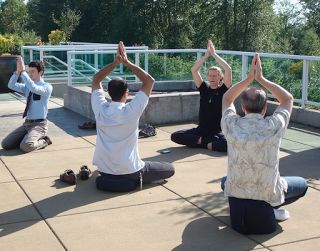
What is Qigong? (And Why Does It Settle the Body So Quickly?)
Think of qigong (pronounced “chee-gung”) as intentional maintenance for your nervous system.
While Western workouts often focus on burning calories or pushing through exhaustion, qigong does the opposite: it restores energy. By combining present-moment awareness, intentional movement, and deep diaphragmatic breathing, qigong helps hydrate and loosen tight fascial tissue, reduces excess muscular tension, activates your lymphatic system, and circulates internal energy (qi) through your body.
-
Qi: Vital energy—your natural physiological stamina and physical presence.
-
Gong: Skill cultivated through practice.
You don’t need prior experience, high flexibility, or any philosophical background to practice. You do need comfortable clothing and a willingness to stand, move, and breathe.
Physical Vitality
Chronic stress often leads to unconscious bracing—tightness in the shoulders, neck, and jaw, sluggish digestion, and a compressed lower back. Gentle bouncing, shaking, and flowing movements pump lymph, open joints, and discharge accumulated stiffness without strain, restoring steady, natural stamina.
Mental Clarity
Telling your busy mind to “just sit still and empty your thoughts” usually creates frustration. Qigong provides a physical anchor for your active attention. By synchronizing body movement with breath, the mental chatter fades away naturally.
Grounded Stability
When your body stacks efficiently over your center of gravity, you conserve energy. This simple alignment helps you step away from constant alertness and reconnect with a calm, steady baseline. Regular qigong practice cultivates an inner quiet that becomes something you can easily draw on throughout the rest of your week.
What to Expect in Class
Every 45-minute Monday session follows a dependable, unhurried arc designed to ease you into the morning:
-
Flowing Warm-Ups & Shaking: Simple micro-movements to wake up the joints, open the spine, and release stagnant morning stiffness.
-
Standing Qigong Forms: Repetitive, flowing movements that circulate breath and blood flow. We often practice specific movements in series to cultivate focus and flow.
-
The Compassion Mudra Series: A quiet, seated hand-position sequence I developed to close each class, giving you a tangible, physical anchor for self-compassion and emotional steadiness.
I have been practicing the Sum Faht® Meditation and forms developed by my teacher, Leong Tan since the mid-1990s. This tradition weaves movement and stillness together, recognizing that moving the body is often the simplest, kindest way to settle an active mind. As a certified facilitator of Compassion Cultivation Training (developed at Stanford University), I integrate practical, secular tools into our mornings so physical movements pair with genuine self-compassion.
Wear loose, comfortable clothing, and be prepared to stand, move, and sit.
“Amy brings so much compassion, generosity, and wisdom to our class each week. I benefit immensely from her qigong and mudra meditation practices—she shares these tools with genuine care and presence.” Carol A
Frequently Asked Questions
Do I need prior experience or flexibility to participate?
Not at all. The movements are low-impact, unforced, and adaptable to every fitness level. If standing for extended periods causes discomfort, every posture can be modified or practiced comfortably while seated in a chair.
Do I have to turn my camera on?
No. You are welcome to keep your camera off so you can focus on your movements and sensations without feeling watched or self-conscious. Turn your camera on if you appreciate community visual connection; keep it off if you prefer a quiet, private cocoon.
What if I cannot attend every Monday?
No attendance tracking or guilt. The Zoom link remains the same each week. Show up when your schedule allows, whether that is every week or twice a month.